Suited Cityscape Project (10)

received_354770025296739DSC_0040DSC_0039dav

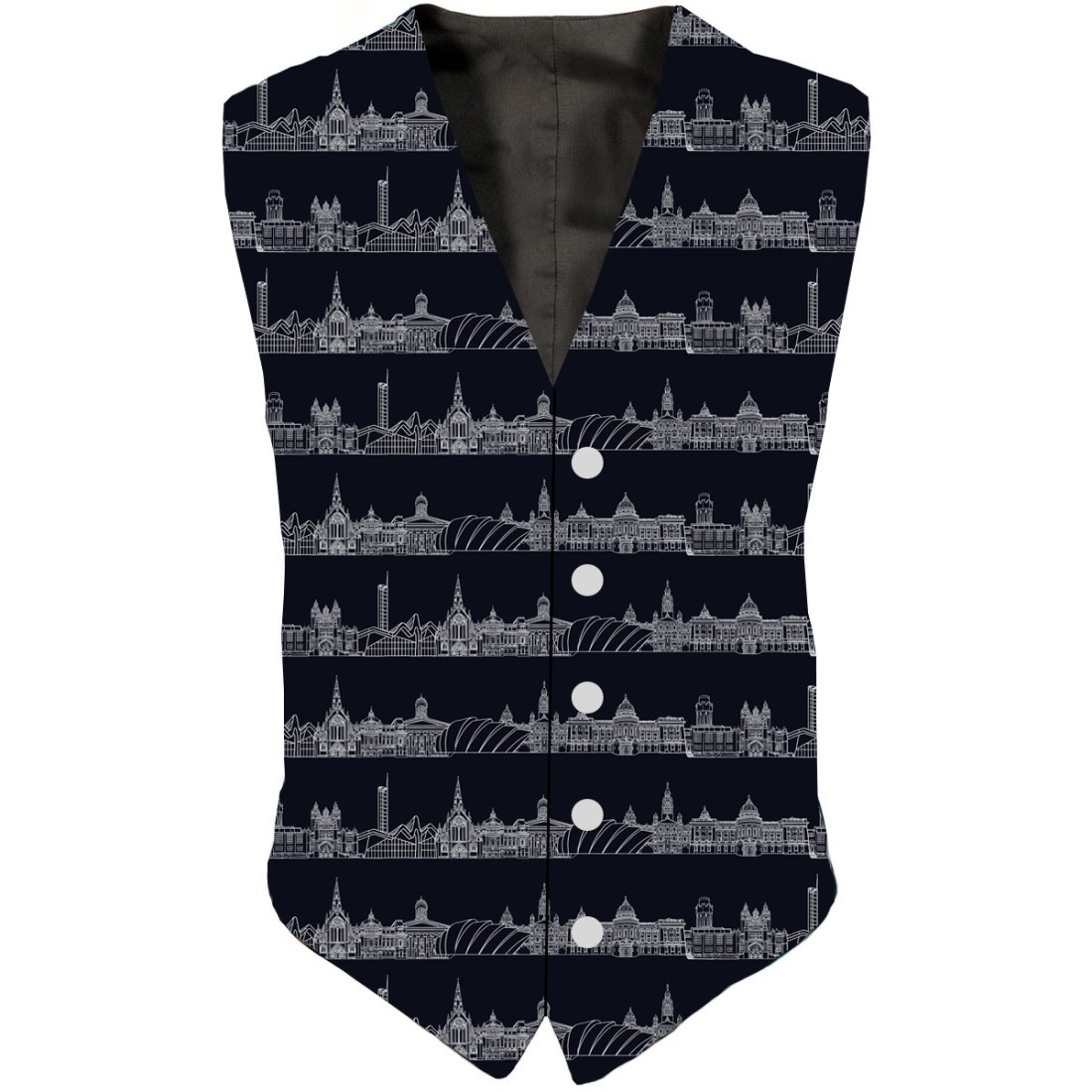
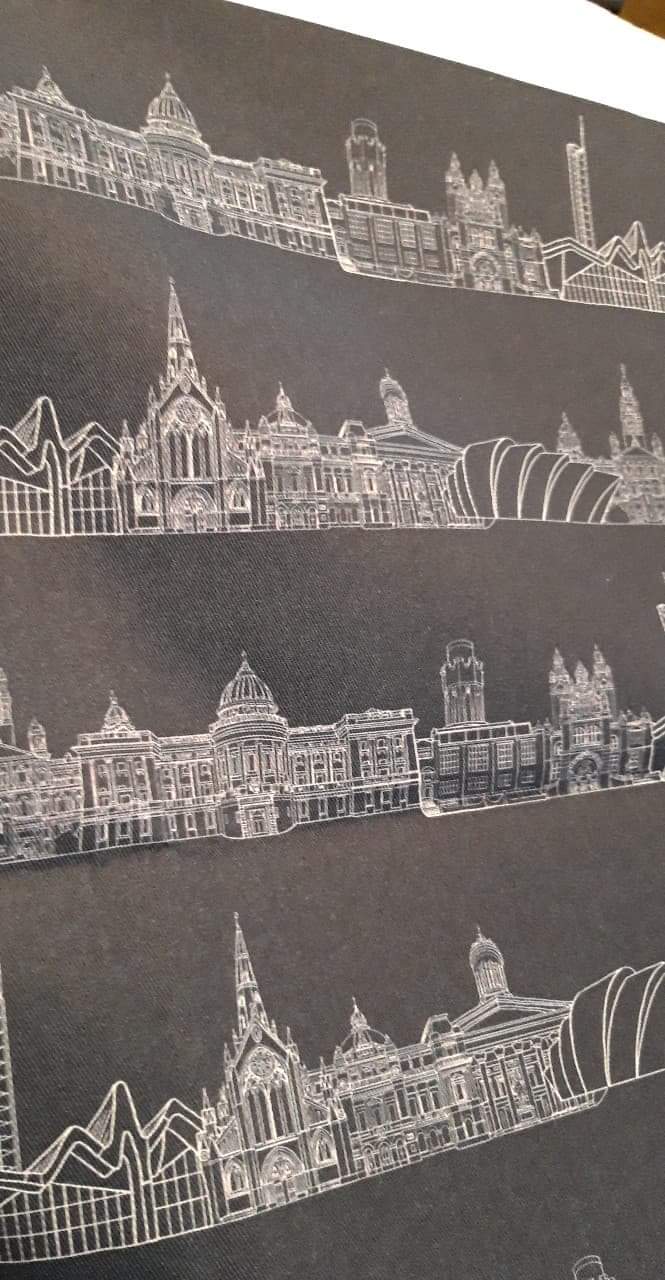
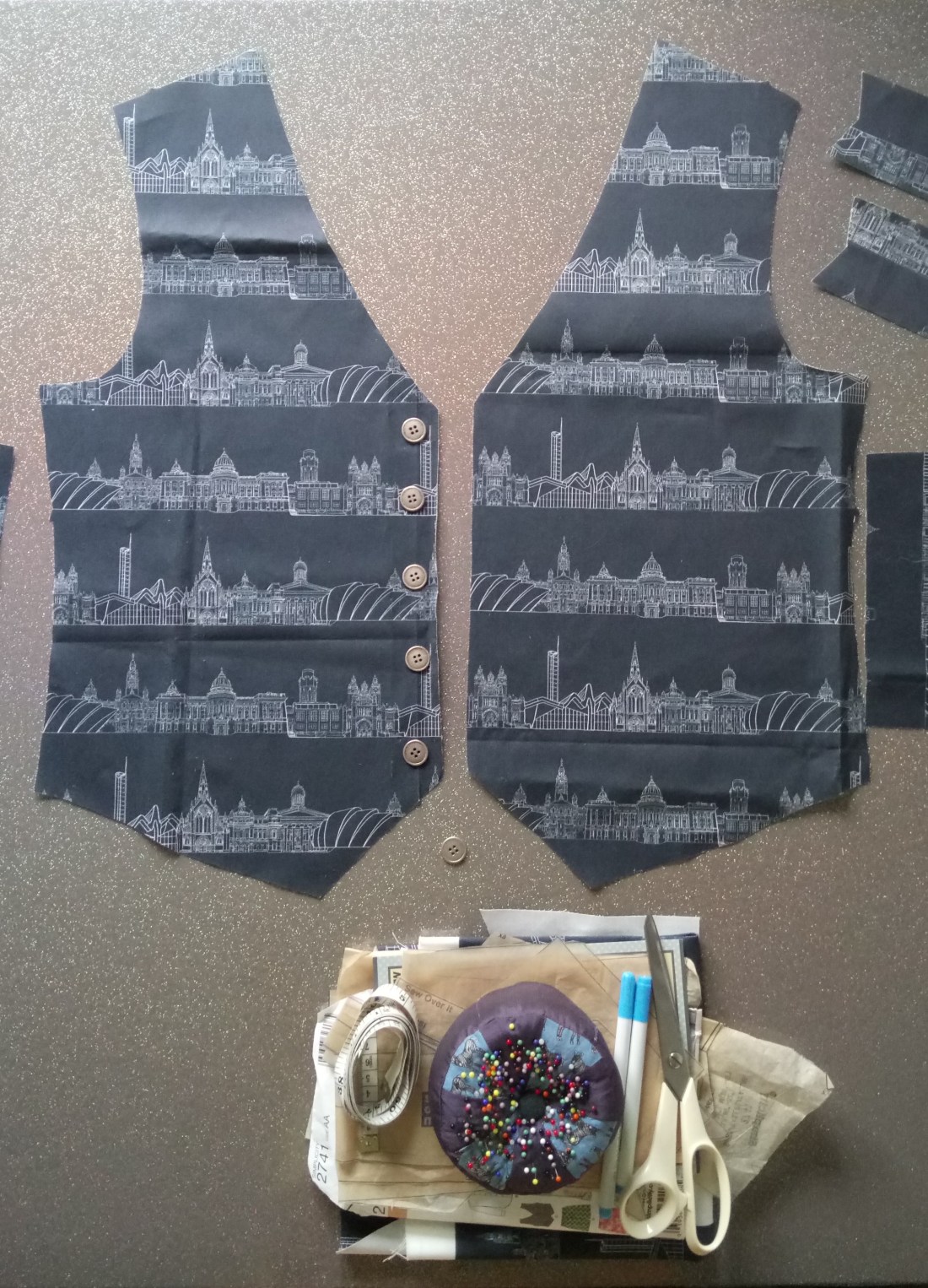
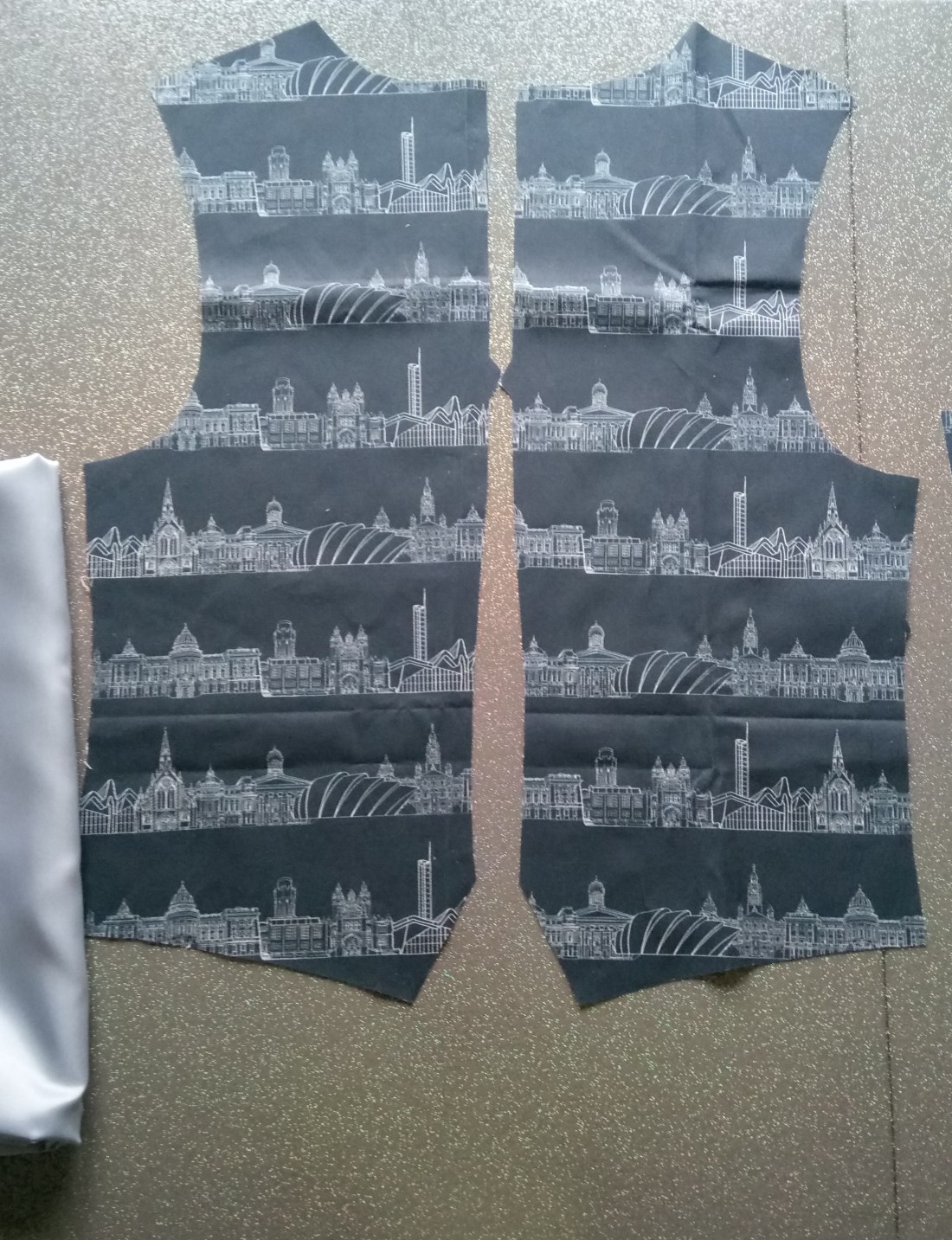
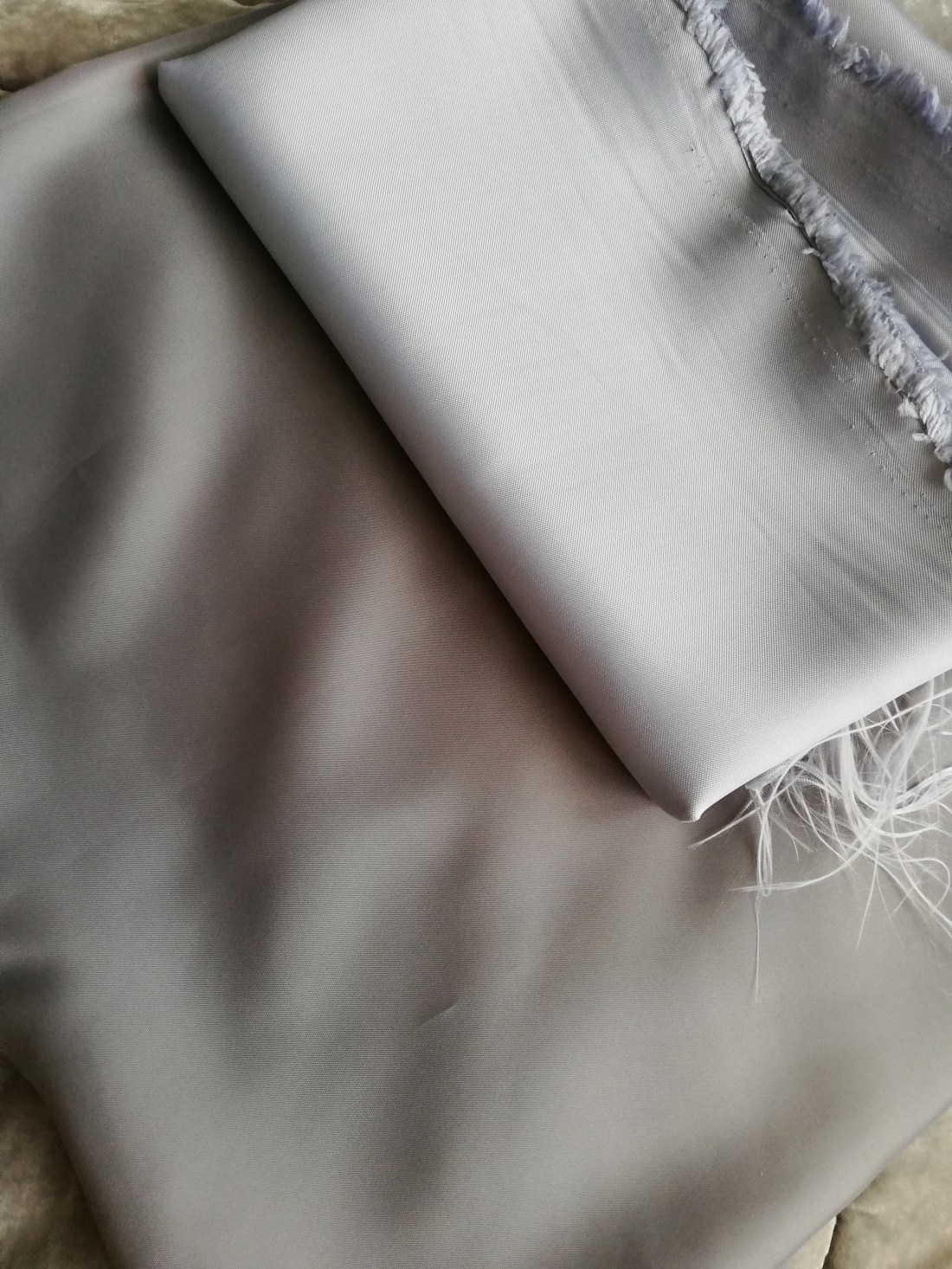
So here goes the creation process! The fabric arrived, and looks just as good as imagined; the weave is fine enough to retain a lot of detail in the pattern itself, whilst giving it a nice texture to the touch. We also got a choice of two fabrics for use in the lining of the waistcoat (inside front and outside back), one slightly lighter and shinier, the other more muted and grey, as well as some simple, brushed metal buttons for the front and a simple buckle for the back.

The sewing pattern we are using is part of the Simplicity Easy-to-Sew No.2741 (Pattern C). This is a fairly basic collarless waistcoat pattern, with ‘fake’ pockets and darts along the front. We pinned down the pattern to the fabric, and cut out the right proportions for someone of my height and weight. Later on, when we decided to use the slightly more muted fabric as the lining, that too was pinned and cut out the same way. Now that we have all the pieces, all that is required is to pin them together and use the fancy sewing machine my mum has for all her other sewing projects to make it all come together!
Suited Cityscape Project (9)

FabricPreview48406235_268621653827349_8326746331905261568_n

Time to order the fabric! This was a little more complicated than I thought, but with some expert help from my mum, I think we made the right choice! I decided to use Printfab to print my design, as their website was very helpful and clear on the different fabric types available and had some useful tools to help get the perfect pattern.

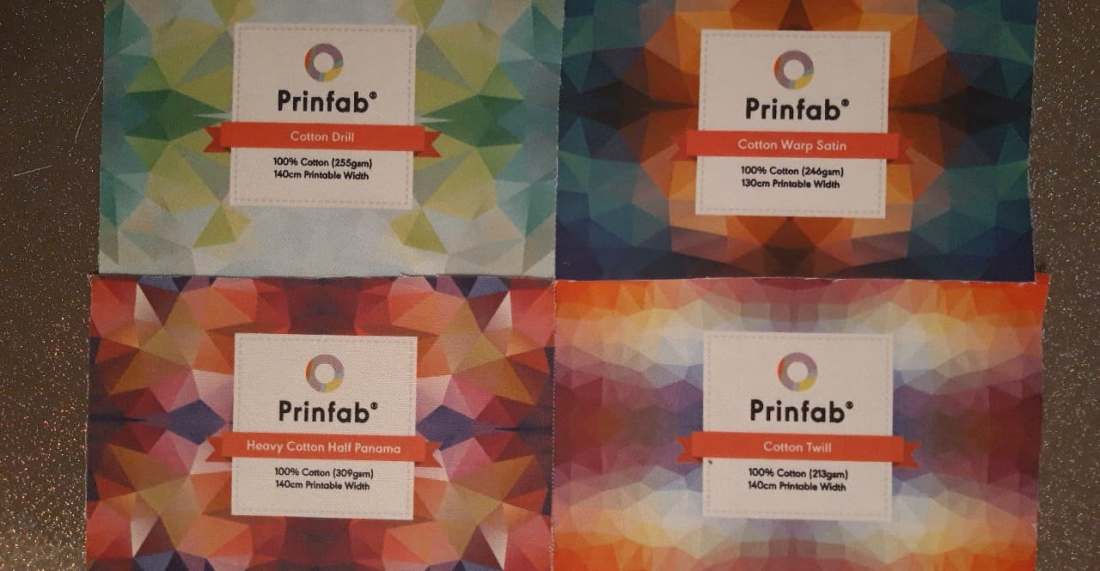
I decided to buy their fabric samples pack just to make sure that the fabric type we got printed was right for the job. The 4 main contenders were Cotton Twill, Cotton Drill, Cotton Warp Satin, and Heavy Cotton Half Panama. In reverse order, the Half Panama was quite a thick, heavy fabric, with very defined stitches. The Warp Satin had a very smooth finish, which would be perfect for getting a crisp print of the design, but it had a slightly shiny finish to it. The Cotton Drill was a lighter than most, as the stitching is not as tightly packed as some of the others, however this left them very defined and rough. So, finally, we have the Cotton Twill, which is what we ended up choosing. This was also quite a lightweight fabric compared to the others, but compared to the Drill it had much finer stitches, so less defined ridges meaning smoother printing, and a nicer, more stable fabric.

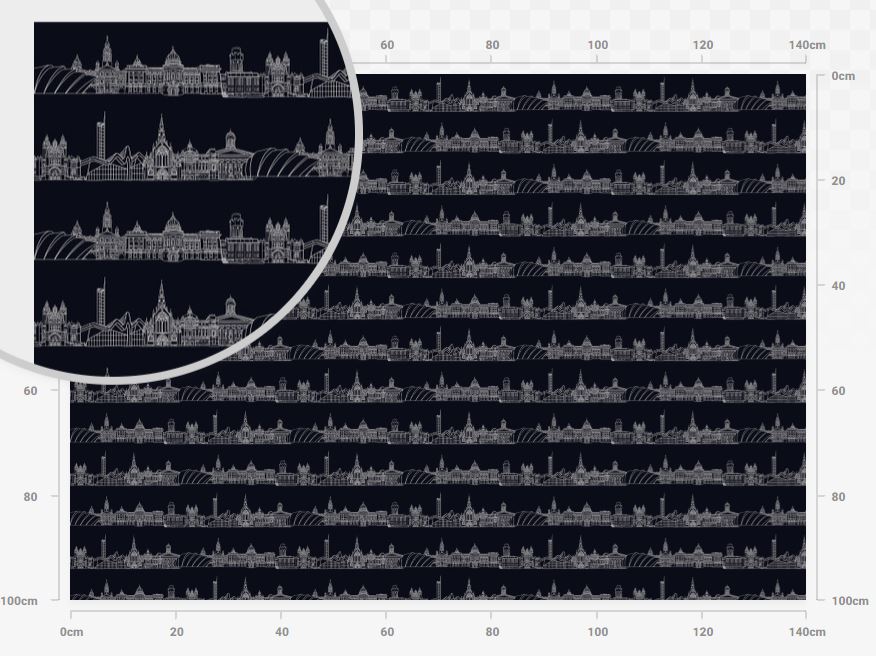
The pattern we decided to use was a nice simple, collarless style, so 1 Linear Metre (140x100cm) was the amount of fabric. I scaled the pattern size down to 75% also, just to make it a little finer and more suitable for the Twill. Finally, I repeated the pattern in Half-Brick format, much like in the practice Photoshop version. to stop the buildings lining up with each other every single line.

Suited Cityscape Project (8)

Waistcoat ExampleGlasgow SLcon

This is the final colour and pattern design I have decided on! In the end the skyline design did win out as I expected it too, the length and variation in the design just makes it a much more interesting pattern overall, and I think that the dark blue colour suits both the overall look of the waistcoat and the pattern subject matter perfectly! In the next step where I buy the fabric to get printed, I may decide to shrink the design further so it would be smaller on the final garment, and it would line it up slightly differently so that it wasn’t a line of Armadillos down the front seams, but ultimately I’m excited to see how the design will turn out in physical form!

Suited Cityscape Project (7)

Pattern Colour TestsTransportColourInceptionColour

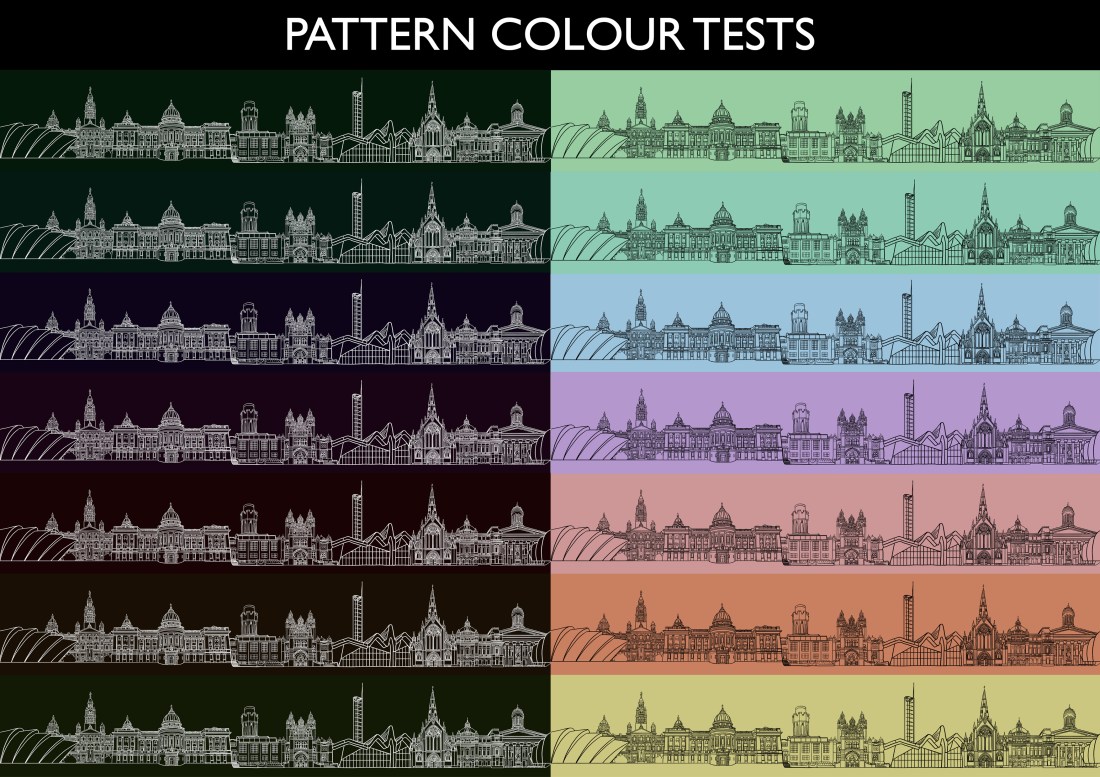
Next up I did a variety of different colour tests for my different designs, before I decide for certain which one I’ll get printed to make into the waistcoat. I tried a wide selection of colours, both light and dark, as well as making the linework white instead of black for the darker shades. In my opinion, the darker colours suit and waistcoat better, as the light and bright ones just make the design look more clown-like.

In terms of the best colours, I’d say that the dark greens, blues and purples are a better fit than the warmer reds and yellows, which just end up looking muddy and dull when darkened. I believe that the new ‘skyline’ design still looks the overall best, but I think the other two designs are still decent backups in the off chance that it doesn’t work quite as well in practice!

Suited Cityscape Project (6)

BlindArcPatternInceptionPatternTransportPatternGgowSL LayoutGlasgow SLcon Linework

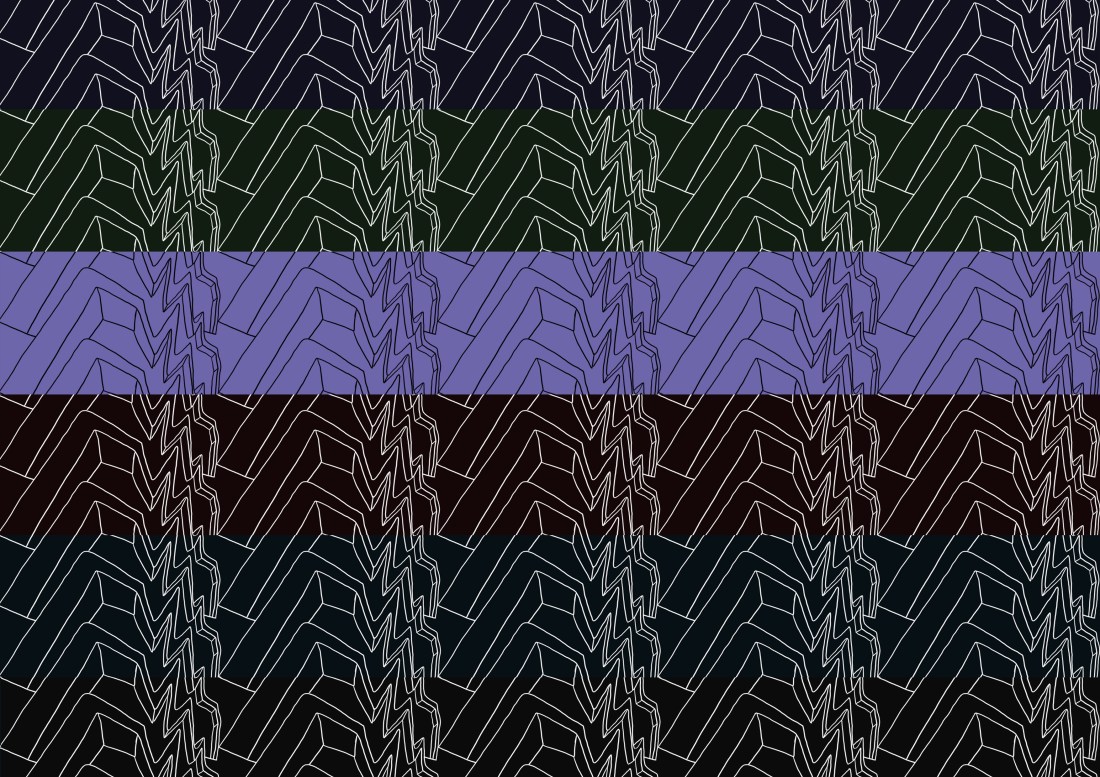
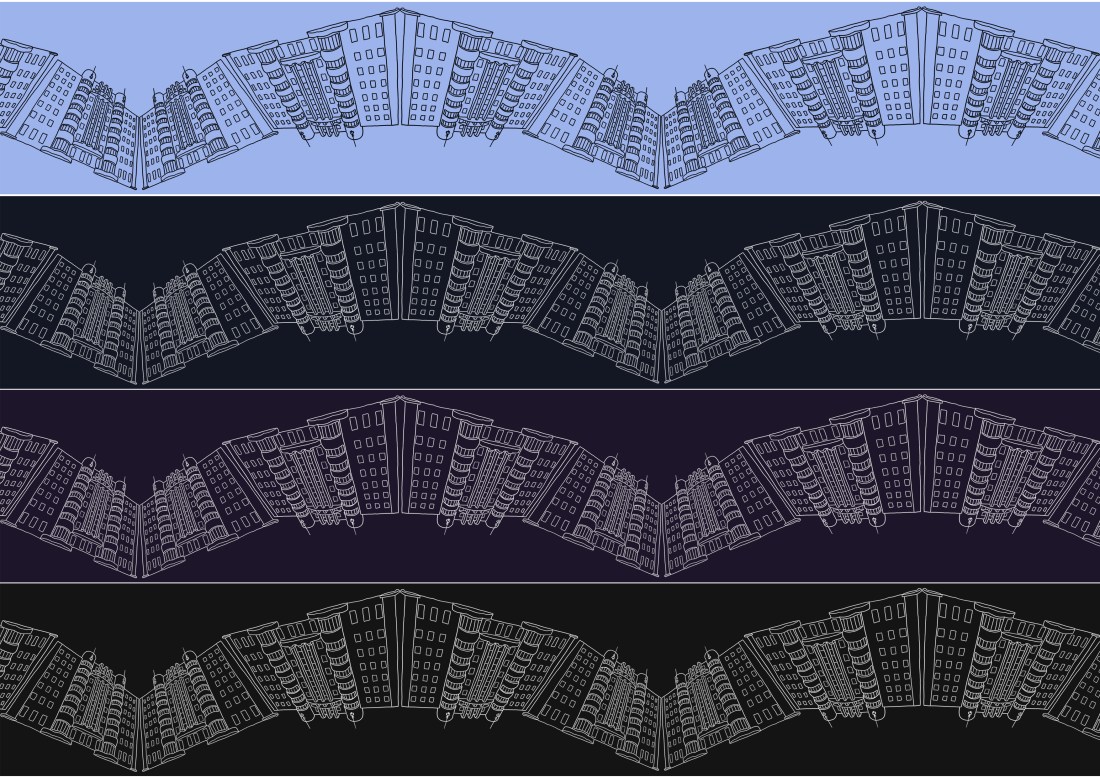
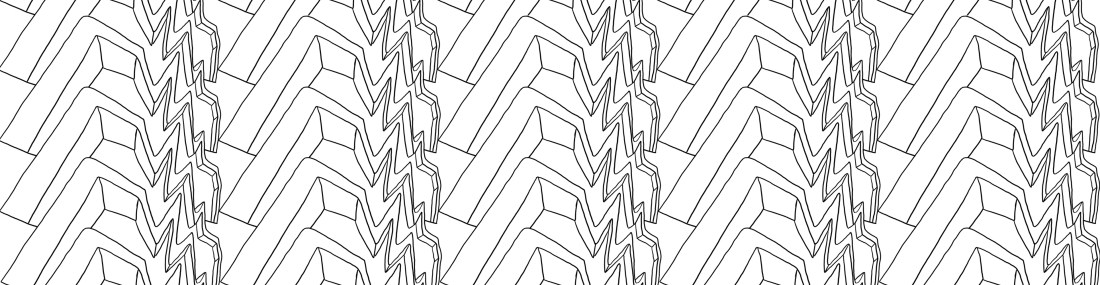
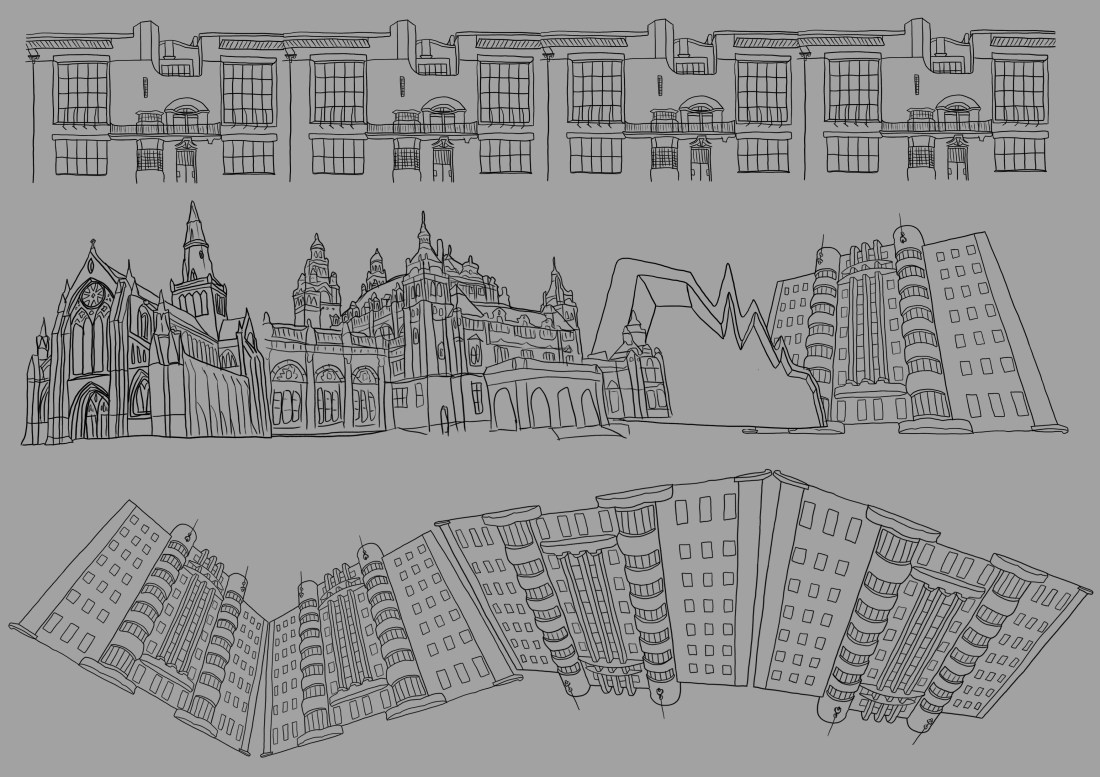
Next, I created and expanded on the pattern ideas and sketches created previously, with a total of 4 ‘final’ designs, 3 of which I’ll take forward and decide which fits best with the intended garment to make! I took the ‘Inception’ style idea from before and extended it’s length, as well as straightening it out to make a long ‘stripe’ pattern that wiggles up and down as it wraps around the clothing. Next, I looked at the repeating vertical pattern, and also repeated it horizontally to create an endless block design. It’s a very simple design in terms of the linework, but creates a very busy and interesting look when all applied together, so hopefully it has the same effect in fabric form!

I also took the old designs from my previous class featuring the blind architectural drawings, and tried to turn them into a a more sporadic design, however I don’t think it works quite as well as I had hoped. Because the designs were hand-drawn, the lines are very thin and can’t easily be darkness or sharpened, and because of them being scanned into a computer there is lots of little imperfections and mark left on it. Also, because of the very messy and random style of the drawings, they’re all very different and don’t have a very consistent weight to them, making it difficult to not make the overall design look cluttered and lopsided.

However, in place of this I have decided to find some new images for some of the buildings in my shortlist and create a longer version of the ‘skyline’ test in the previous sketches. It took a very long time to properly adjust everything into what I thought is the best positioning and lineup, and then of course the actually drawing of the line art, but I think it was clearly worth the time! Featuring 11 different locations adds a lot of variety, and more landmarks to recognise! So, instead of the older blind drawings, I’ll take this design forward in its place.

Suited Cityscape Project (5)

Pattern TestsPattern Tests2

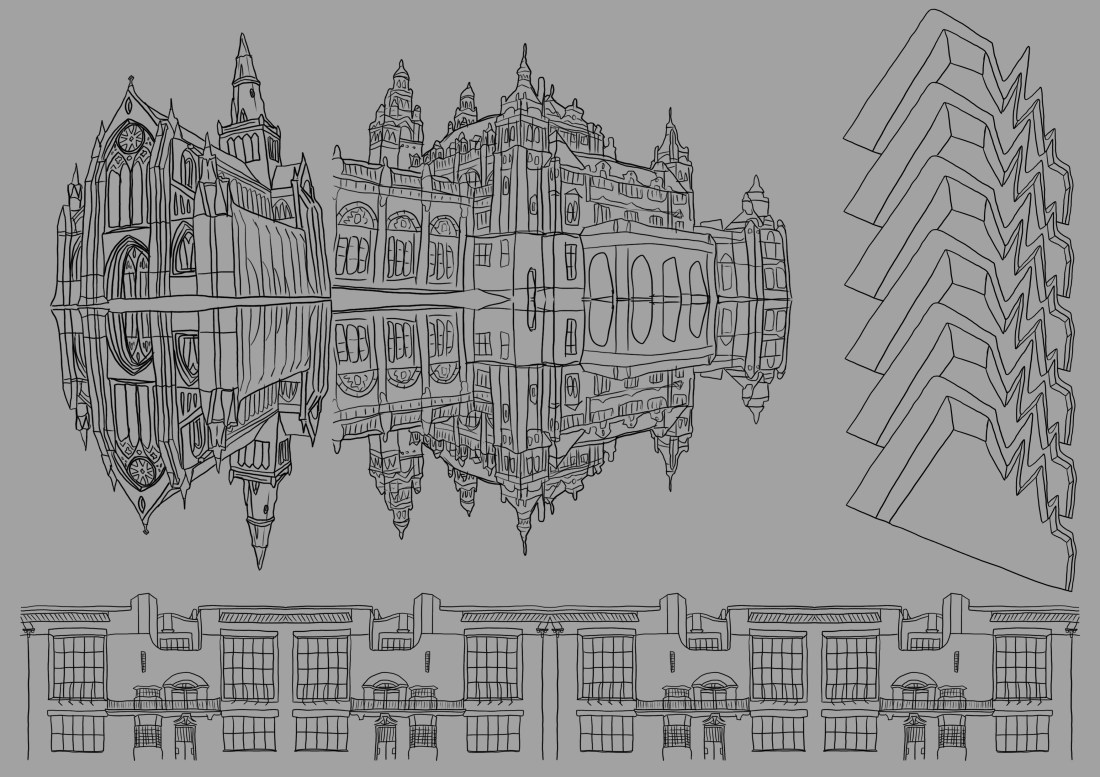
Next up – pattern testing! I took some of the previous drawings I did and tried different ways of creating some form of repeating pattern. The different styles I did in the previous segment definitely helped here, as they suited different ways of repeating themselves. I tried to include both simple and some wackier designs, from simple repeating patterns to inverting, overlapping, and reflecting the linework.

I didn’t do much testing with the old drawings I had of the blind buildings, as with them being such rough, random and erratic shapes, I think they will suit just spreading them out on the fabric, without them being joined in any way, and keeping them all separate, as we’ll see in the final designs made.

Personally, my favourite ideas are the simple minimalist design repeated vertically, the design that includes all the drawing overlapping one another to create a faked skyline, and the low-angle building rotated and inverted to make a disorienting zigzag of perspectives. The simple repeated and flip-repetition designs are simply too… simple, and the ‘reflection’ design is just a bit too busy for my liking.

Suited Cityscape Project (4)

Initial Building Sketches

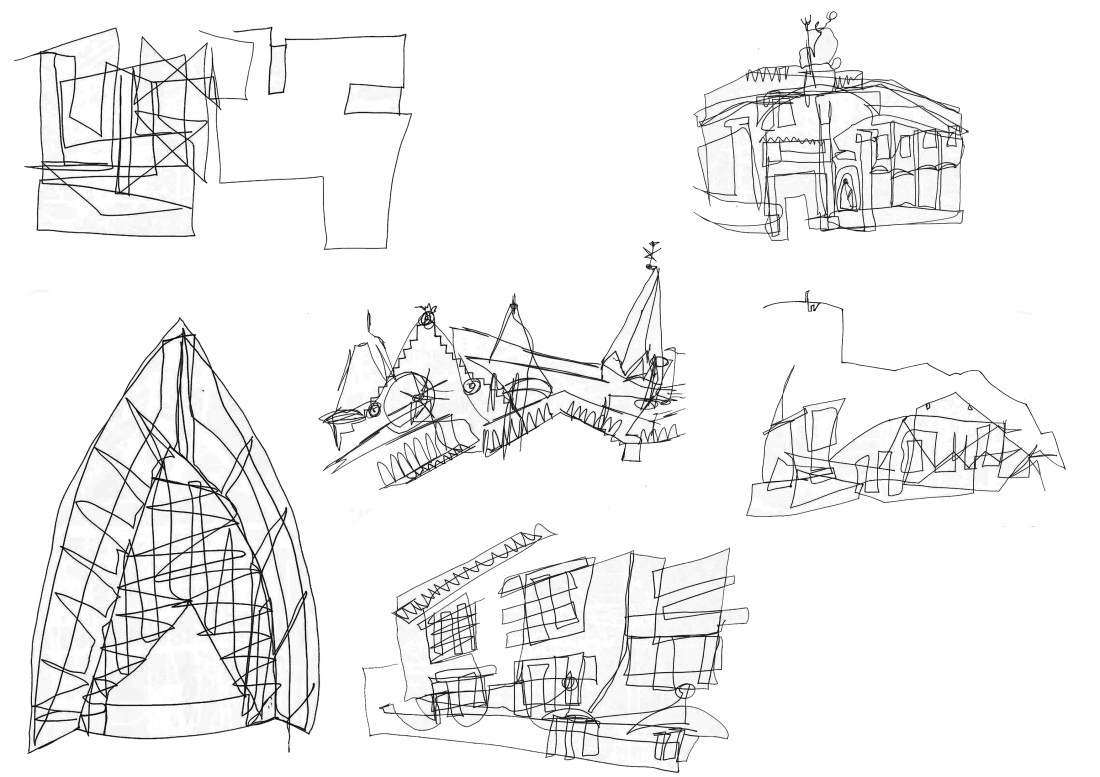
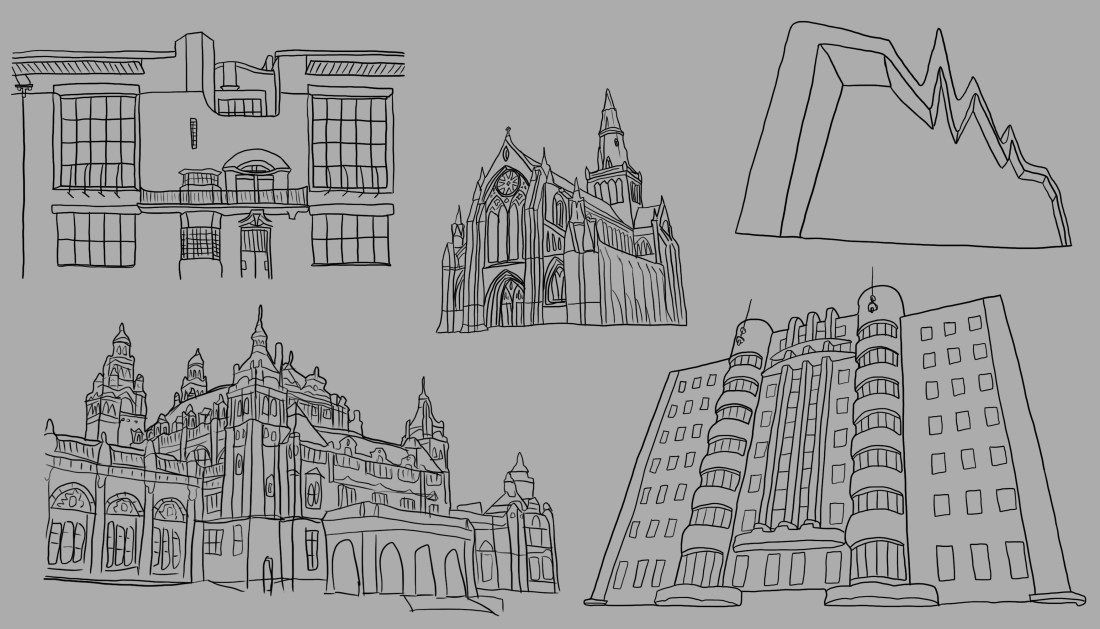
Next on the list, I started to sketch up my linework ideas for the fabric pattern. I mainly used digital drawing tools, as it would simplify the process of using the assets later on or applying them to a fabric, but I did also have a few physical drawing just to try out some ideas. I also dug up some of the work I did for a class in my first year of university, where I drew buildings without looking at the paper while I drew, as I thoughts the unique and messy style of drawing might look interesting on a garment.

I drew some of the buildings I had collected in the previous week in similar but slightly different ways, varying the speed at which I drew and the accuracy and detail I aimed for to see what I think would look more interesting. I also chose a variety of different angles so I could later play around with how they would work in repeating patterns, etc, and left some very minimal or without borders, to try out in the next step.

Suited Cityscape Project (3)

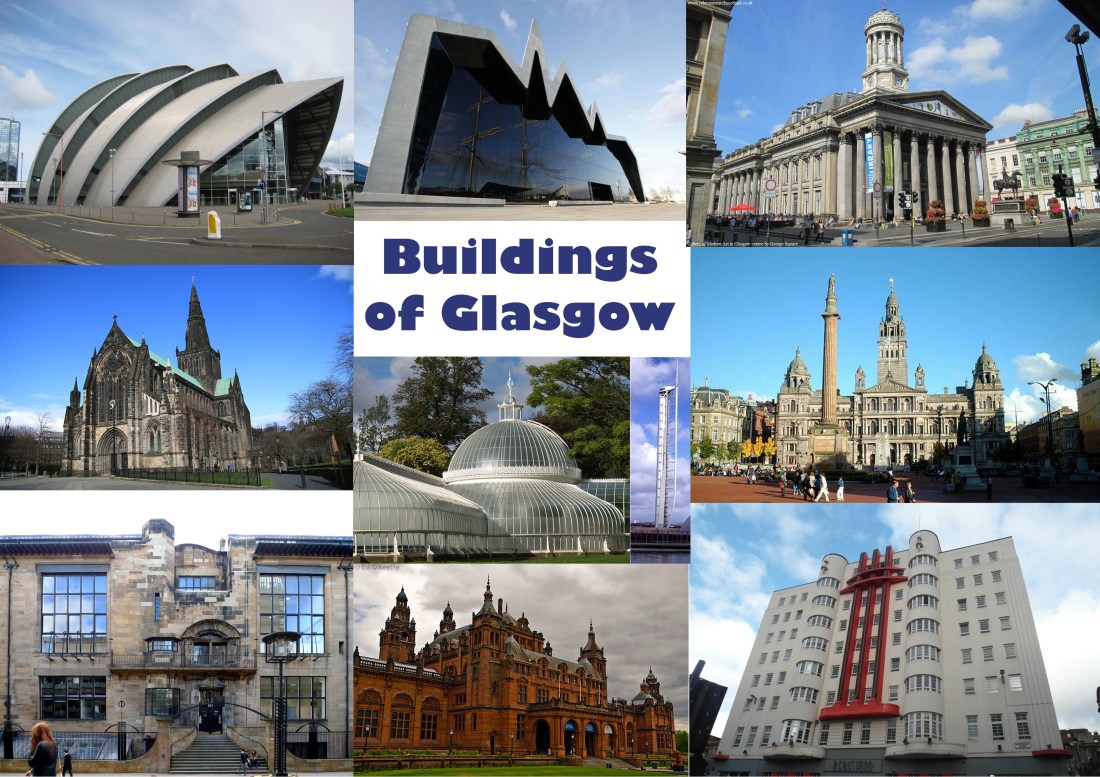
Buildings of GlasgowSketchy Building Research

The next step of the project was deciding on the subject matter for the fabric design, and several visual styles and drawing techniques. For the chosen subjects I decided on buildings in either Glasgow or Dundee, the former being where I grew up and the latter where I study. I had a preference on choosing Glasgow, but an idea I have using some work and techniques I’ve previously used meant that I was happy enough to consider Dundee, or a mix of the two.

I looked at images of several well known and famous buildings in both cities, including places such as the Glasgow School of Art, Kelvingrove Museum, and the Armadillo, trying to select a wide range of building styles. I also used articles and other sites to look for other popular and well known buildings I might not know off the top of my head or forgot about – especially for Dundee as I’m less familiar with the city.

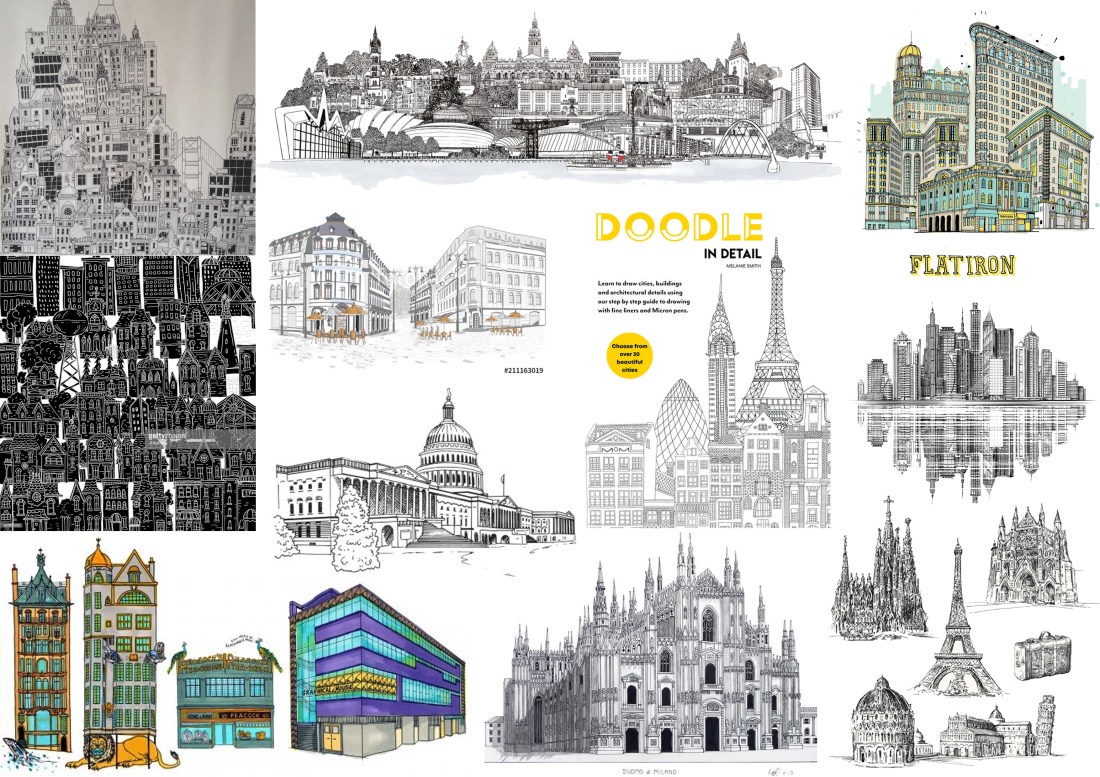
Lastly I looked at some styles of drawing I could incorporate into my design, focusing mainly on linework. The two main paths I could choose seemed to be a more accurate, clear approach, versus a more sketchy and stylised one, which I would experiment with later. I also looked back at previous drawing I had done, as well things like ‘A Brisk Walk’ – a self guided tour around Glasgow city centre and six very different pieces of architecture that my family and I took a few years ago.

Suited Cityscape Project (2)

Waistcoat TypesArchitectural Clothing Designs

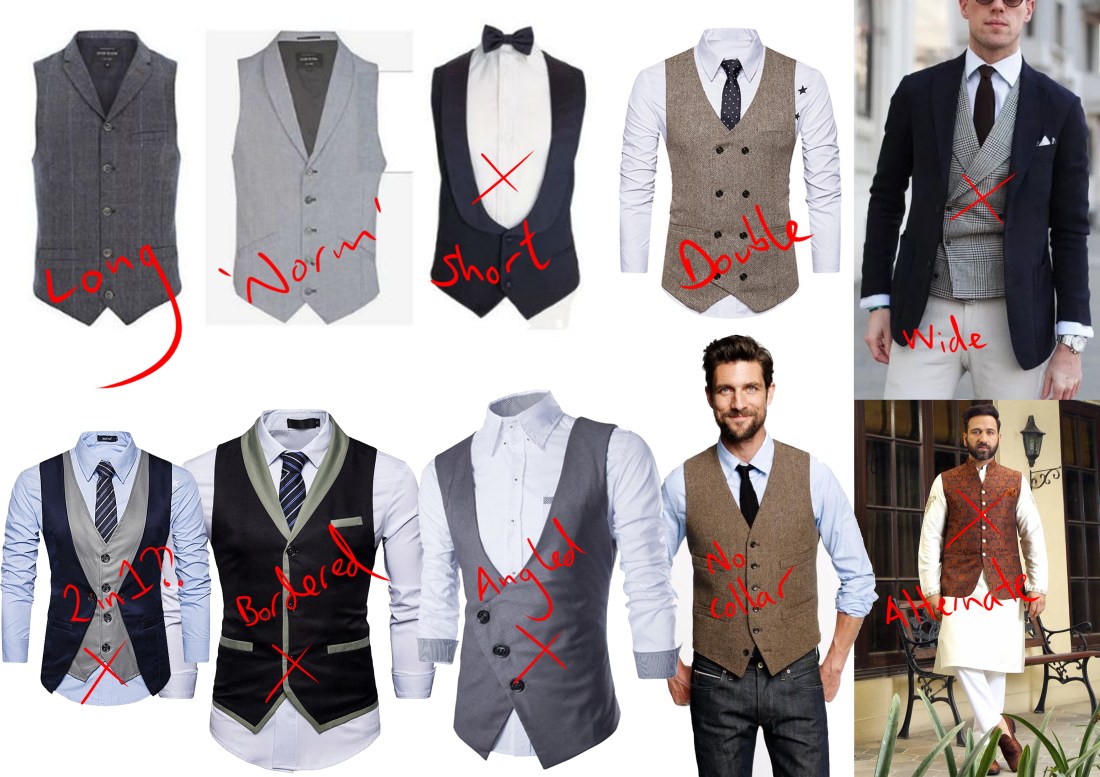
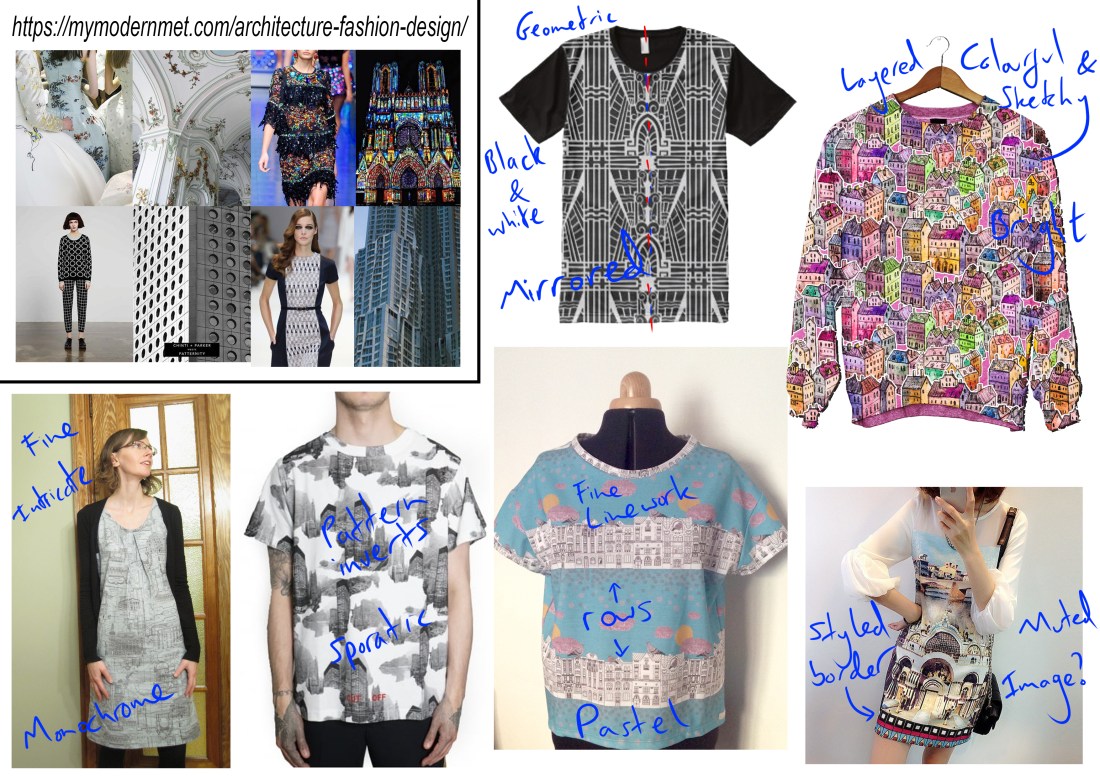
The first two things I started researching were firstly the different styles of waistcoat I could make, and secondly some examples of how architecture has been used in fashion design. I initially decided on a waistcoat as the piece to create for a number of reasons – it’s something I would wear and fits my own fashion style, it’s something that doesn’t require an enormous amount of fabric to make in the case I need to buy more, and lastly it isn’t massively complex, or requires very precise fitting.

Looking at the different styles, both more ‘normal’ styles and some more different and unique approaches, I quickly decided that again a standard format of waistcoat would be a better choice, considering my inexperience with actual sewing and garment making. From there I chose a few options – either an average or long button length at the front, and either with or without a collar. Both styles are fairly standard, and would be within my comfort zone, while still giving me a few options that I could decide on later down the line, depending on the final design and fabrics.

In terms of looking at other similarly designed garments, I didn’t limit myself to just waistcoats – partially because the general principles would still be the same or could be transferred at least, and also because it was difficult to find specifically what I was looking for, with it being a pretty niche search. Between browsing images and reading a handful of articles on designs, I decided that I wouldn’t want anything too bright or flashy, and that some kind of line drawing technique for the fabric design would fit best with both my personal skills and the piece in question.

Suited Cityscape Project (1)

SuitedCityscape Title

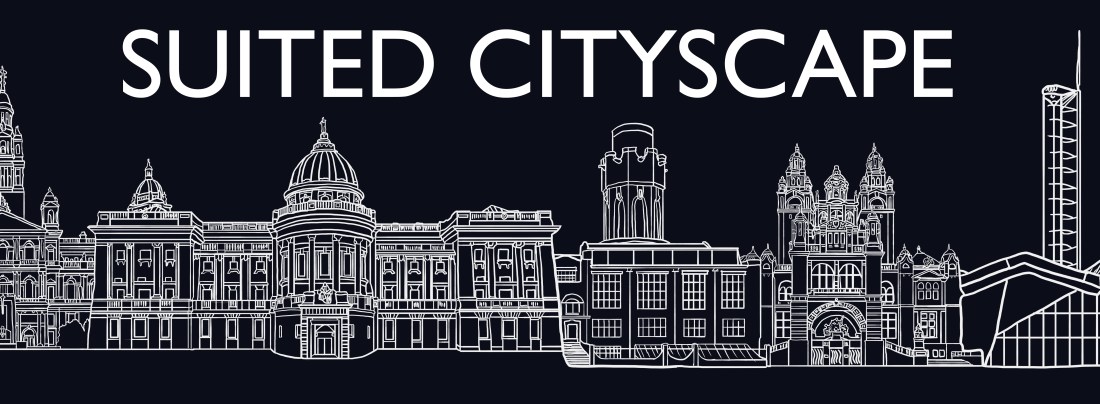
Suited Cityscape is a project of mine where I attempt to bridge my knowledge and love of architecture with something new and interesting to me – fashion. I like to think that I myself have a rather unique or, at least, uncommon style in my daily casual dress, preferring waistcoats, shirts and ties over t-shirts and hoodies. However, designing or creating clothing styles or fabrics has never been a topic to seriously cross my mind, even though it’s something that I have personal ties to through my own fashion sense, as well as my mother, who recently in the past few years has started to do sewing more and more, often making pieces of clothing for various members of the family, and even starting her own Instagram blogs and showing off her creations. During this project I plan to research, design, and ultimately create a piece of fashion, whilst blending in my own personal interests and skills.